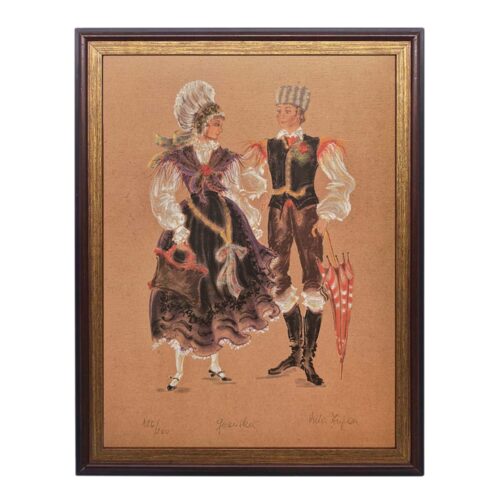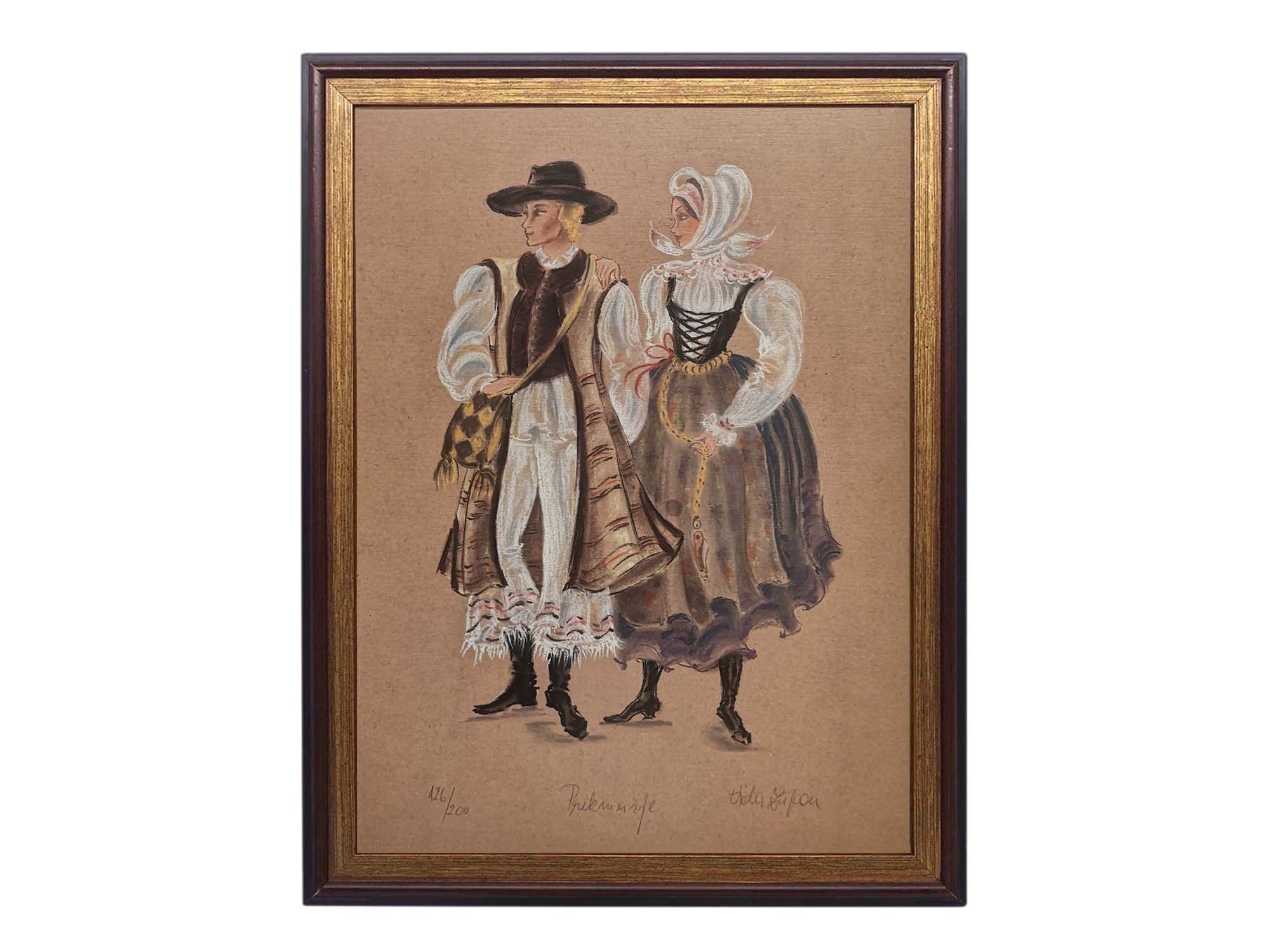
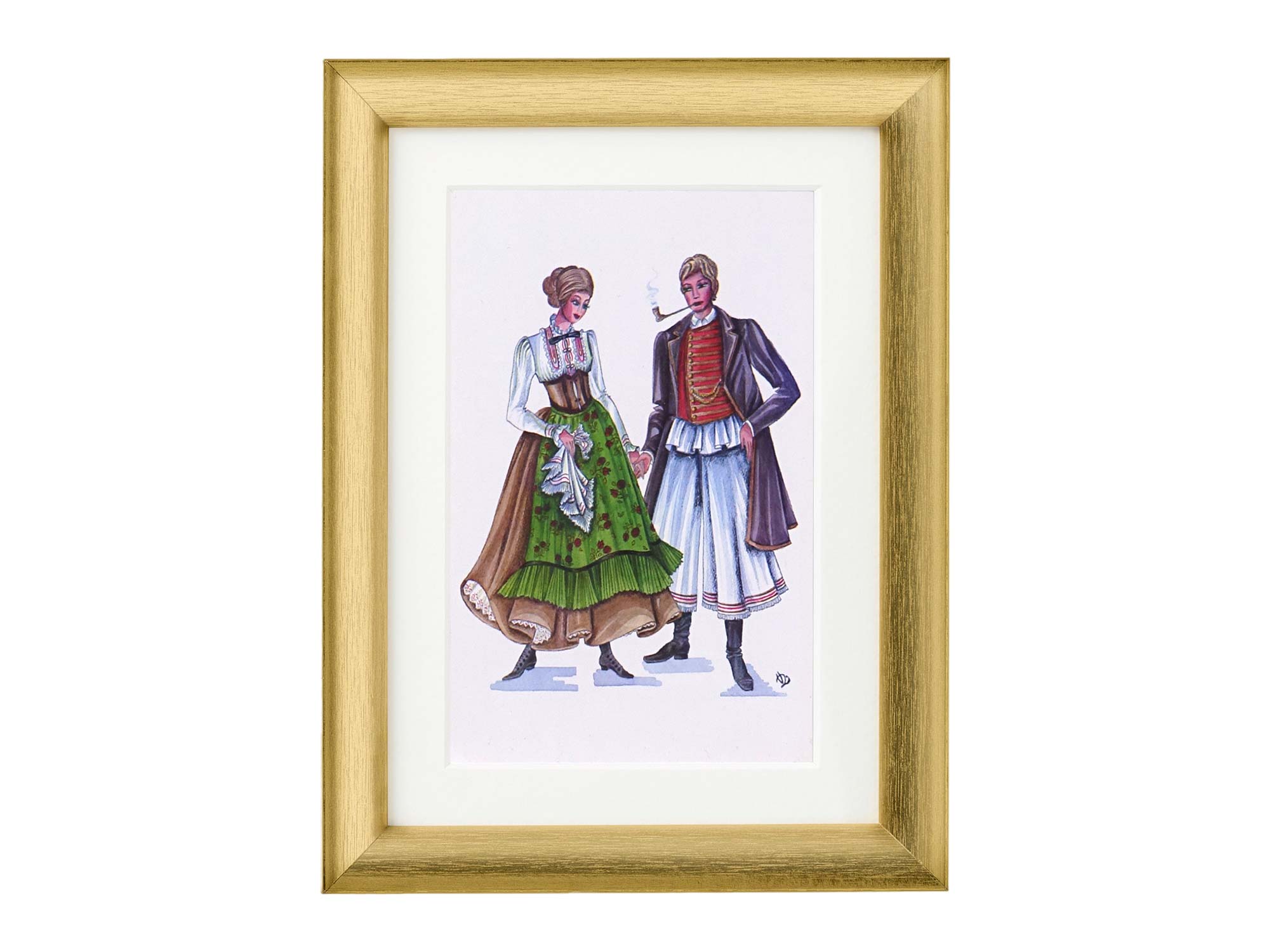
In Prekmurje, until the end of the 19th century, costumes were made from native linen and they remained loyal to the lighter color of their clothing.
Men wore loose linen trousers that reached the ankles and boots that reached the knees. Over the shirt, they wore a long waistcoat, often made of purchased cloth. They wore a black hat with a narrow brim. Some of the boys had tassels attached to the left side of their hats, from which colored ribbons hung down to their waists. The boys got these ribbons from the girls. The more ribbons a guy got, the more girls liked him.
In the 20th century, women’s Prekmurje costumes took on a special shape and moved away from tradition. It is a special costume image developed by folklore groups. The costume consists of a white shirt and a wide skirt, with a heavily gathered petticoat underneath. The apron is darker, often green, but sometimes also blue or red. It is made from patterned, purchased fabric. The attachment to tradition and adherence to white or a lighter color is best indicated by a bright headscarf.
These are just some of the characteristics of the Prekmurje costume.
Details:
Title of work: Prekmurje national costume
Technique: Graphics
External dimension: 35 x 48 cm; 19 x 23 cm
All graphics are signed and numbered
Limited edition of 126/200